A pharmacy technician prepares a new prescription for Capoten. The vial label reads as follows: Captopril 25 mg tablets,
Take 1 tablet twice daily with food. # 60 tablets
Assuming the technician interpreted the prescription as written, which of the following is the MOST APPROPRIATE action?
Explanation
Captopril (Capoten) is an angiotensin-converting enzyme (ACE) inhibitor used to treat hypertension, heart failure, left ventricular dysfunction after myocardial infarction, and diabetic nephropathy. It inhibits the conversion of angiotensin I to angiotensin II, thereby reducing vasoconstriction and aldosterone secretion.
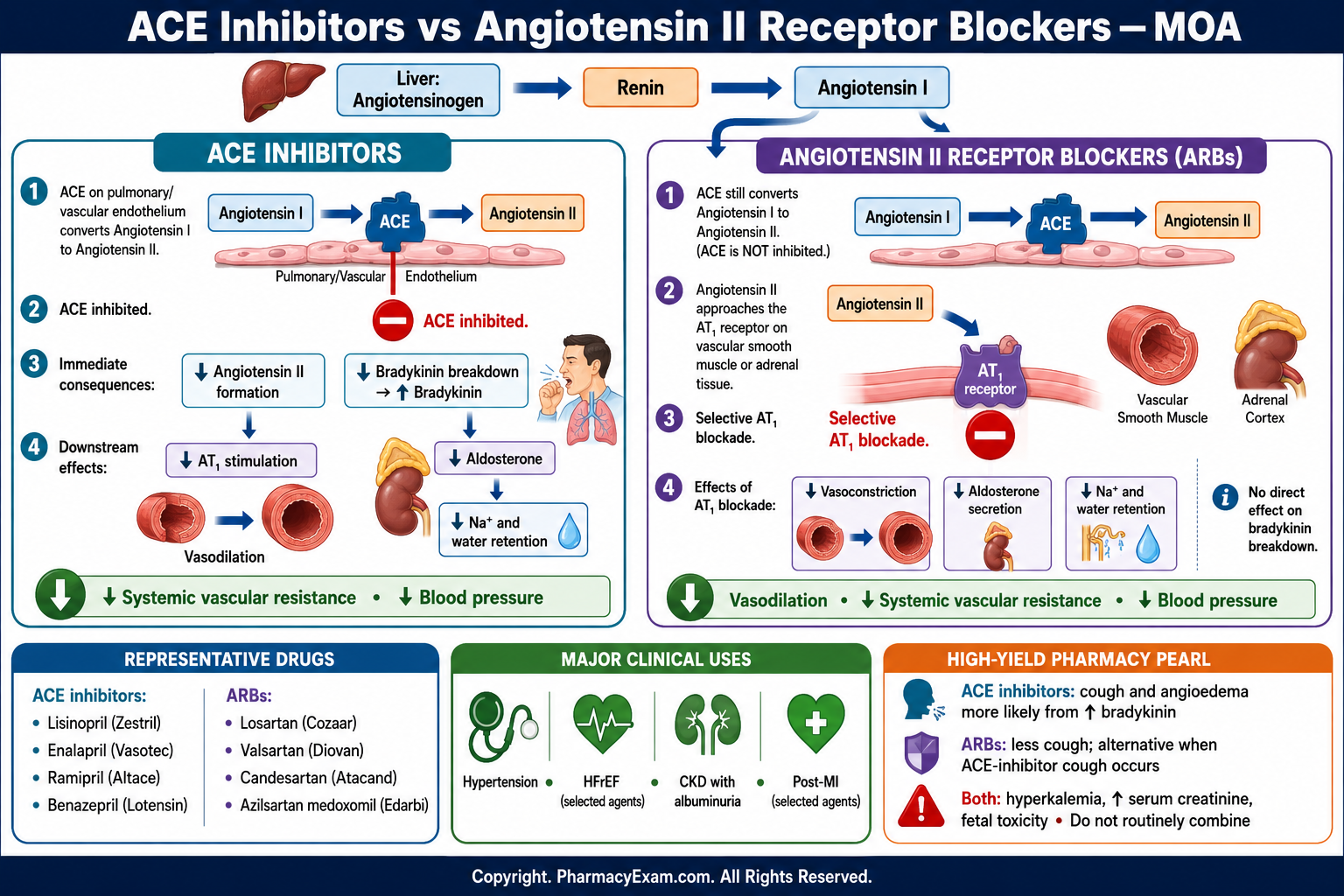
For hypertension, 25 mg twice or three times daily is an accepted initial dosage in many patients. The prescribed tablet strength, dosage frequency, and oral dosage form are therefore reasonable and do not require clarification with the prescriber.
Food decreases captopril absorption by approximately 30% to 40%. Captopril should be taken on an empty stomach, preferably 1 hour before meals. Therefore, the incorrect auxiliary label should be replaced, making choice D correct. Dispensing the prescription as labeled would provide incorrect administration instructions.
Important adverse effects include dry cough, hyperkalemia, hypotension, acute kidney injury, and angioedema. Captopril may also cause rash, dysgeusia, proteinuria, neutropenia, or agranulocytosis.
Key Points:
-
Monitor blood pressure, serum creatinine, and serum potassium after initiation and dosage increases.
-
ACE inhibitors have a boxed warning for fetal toxicity and should be discontinued as soon as pregnancy is detected.
-
Do not administer an ACE inhibitor within 36 hours of sacubitril/valsartan because of the increased risk of angioedema.
Exam Pearl: Captopril’s sulfhydryl group is associated with the distinctive adverse effect of dysgeusia.