Explanation
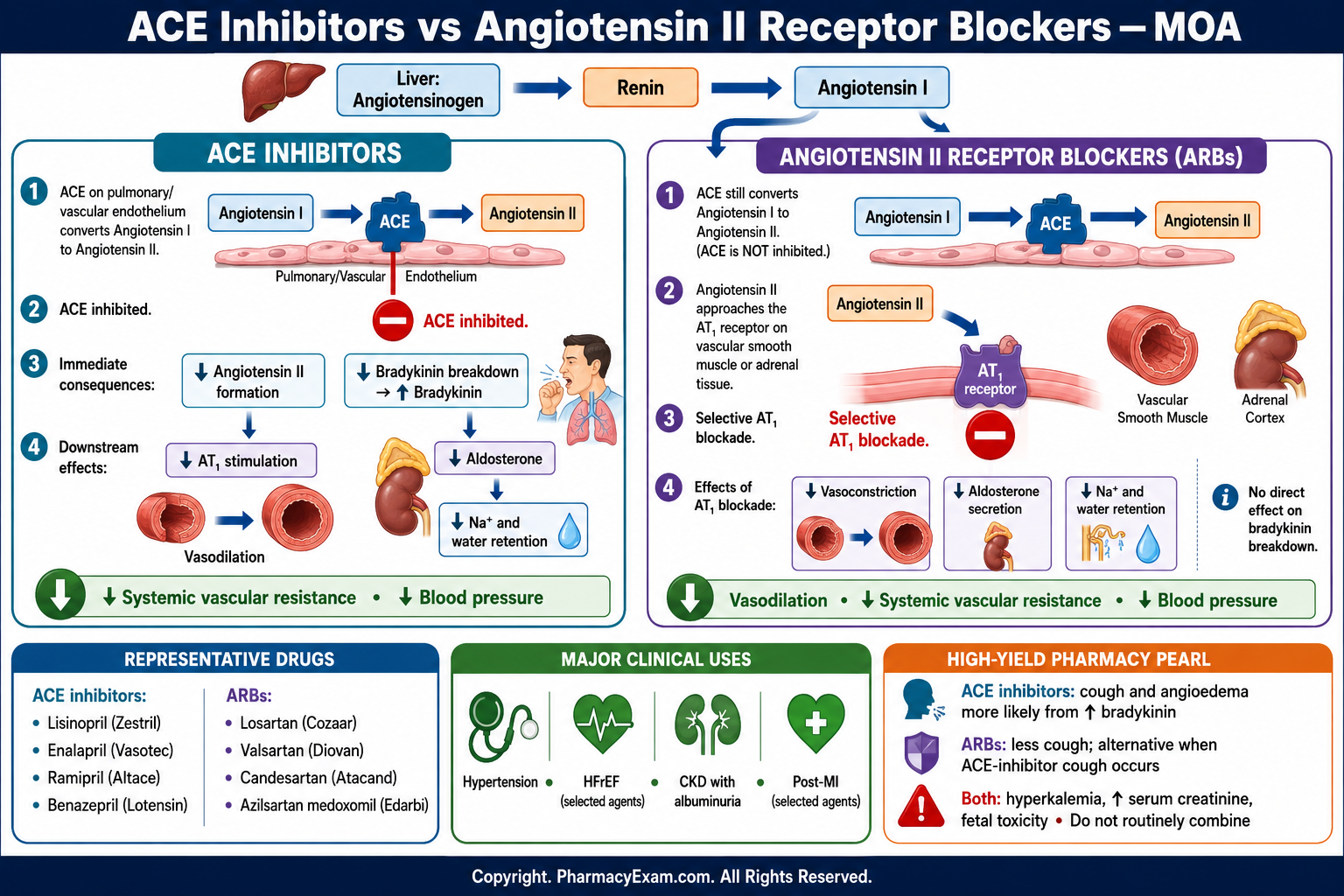
Perindopril (formerly marketed as Aceon) is an angiotensin-converting enzyme (ACE) inhibitor used to treat hypertension and to reduce the risk of cardiovascular mortality or nonfatal myocardial infarction in patients with stable coronary artery disease.
For hypertension, the recommended initial dose is 4 mg once daily. The dose may be titrated to a maximum of 16 mg/day; the usual maintenance dosage is 4–8 mg/day administered once daily or in two divided doses.
Perindopril is an ACE inhibitor used for hypertension and risk reduction in stable coronary artery disease.
For stable coronary artery disease, the initial dose is 4 mg once daily for 2 weeks, followed by 8 mg once daily if tolerated. In patients older than 70 years, the labeled titration is 2 mg once daily during the first week, 4 mg once daily during the second week, and then 8 mg once daily if tolerated.
Important adverse effects include hypotension, dry cough, hyperkalemia, kidney dysfunction, and angioedema; agranulocytosis and proteinuria are rare. Pilocarpine is a muscarinic agonist, nizatidine and ranitidine are histamine H
2-receptor antagonists, and metoprolol is a selective beta
1-adrenergic blocker.
Key Points:
-
Monitor serum creatinine, renal function, and potassium after initiation and dosage increases.
-
Do not administer an ACE inhibitor within 36 hours of sacubitril/valsartan because of the increased risk of angioedema.
-
ACE inhibitors carry a boxed warning for fetal toxicity and should be discontinued when pregnancy is detected.
Exam Pearl: ACE inhibitor-associated angioedema requires immediate discontinuation and may occur even after prolonged therapy.
You have reached the last demo question. Explore full access for more practice.